Story and photos by Peter Willott
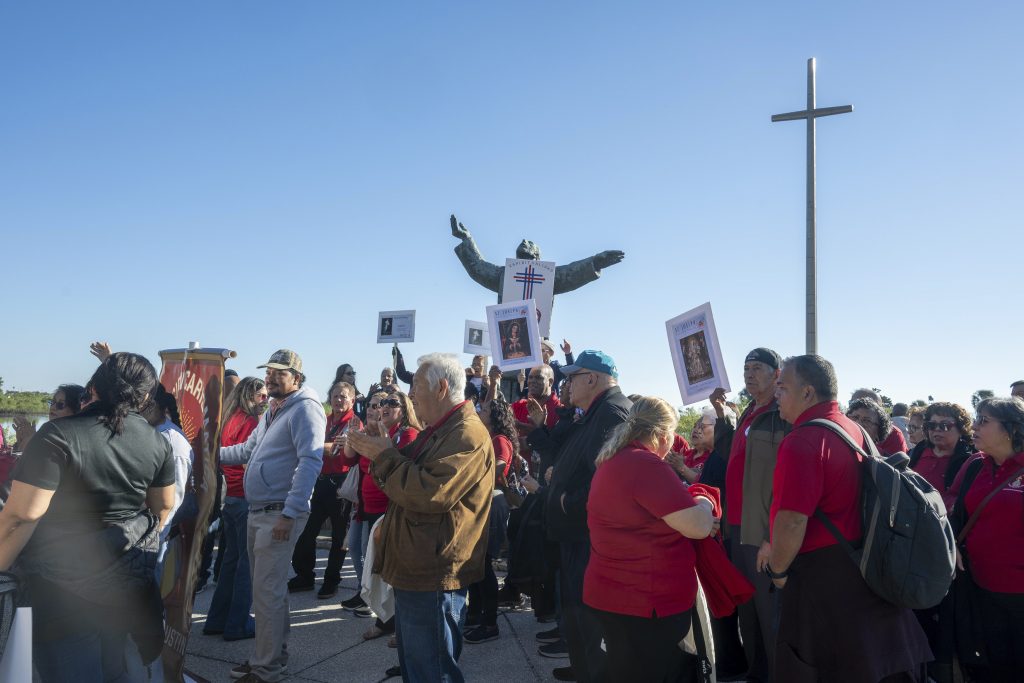
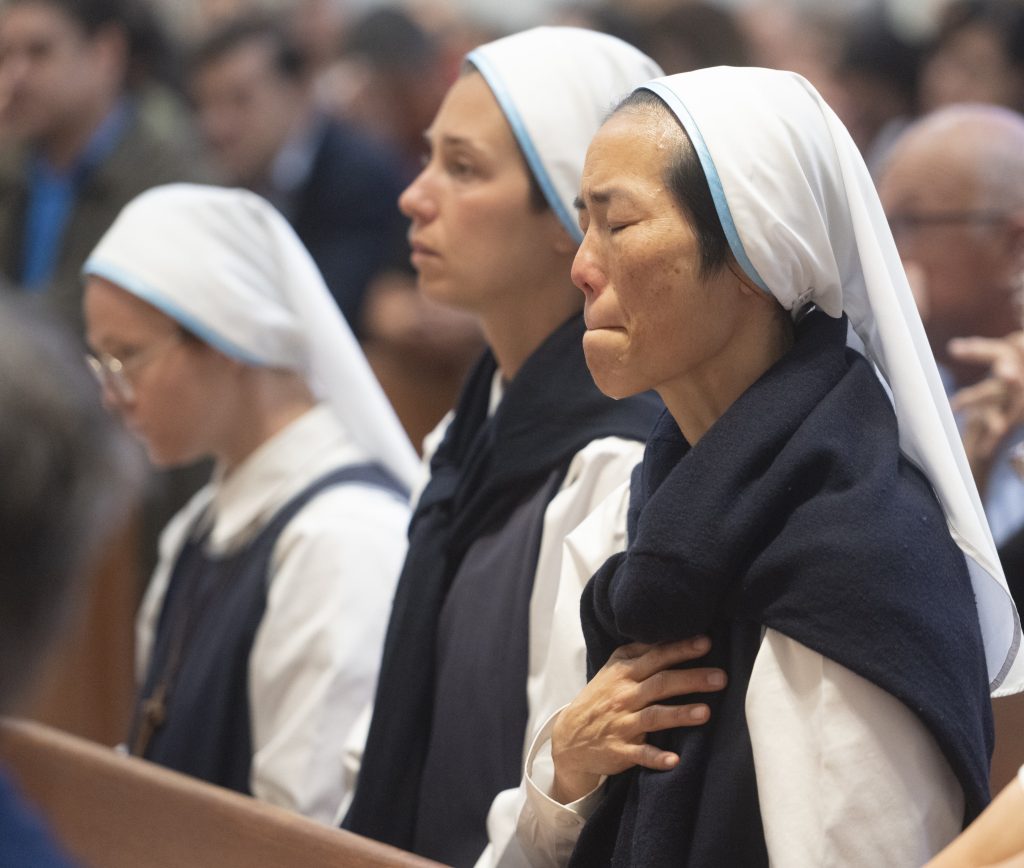
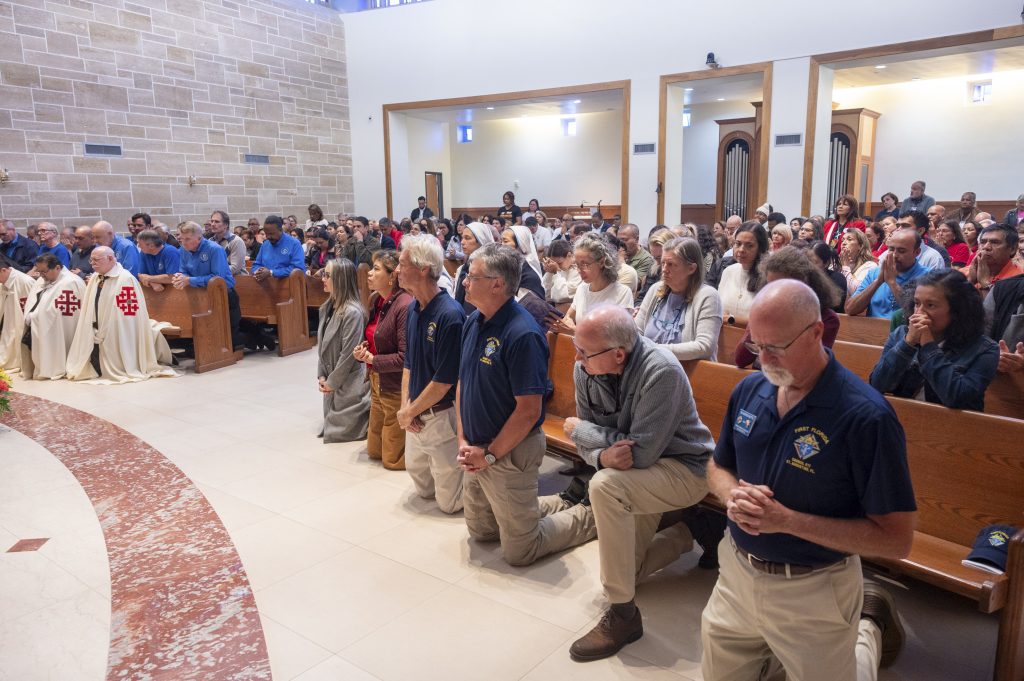
Hundreds of parishioners from across the Diocese of St. Augustine gathered Saturday at the National Shrine of Our Lady of La Leche at Mission Nombre de Dios to celebrate the role of lay apostolates and ecclesial movements in the life of the Church.
Lay apostolates are groups of lay Catholics who serve the Church and community through organized ministries such as the Knights of Columbus or the St. Vincent de Paul Society. Ecclesial movements are faith-based communities like Cursillo or Emmaus that help members grow spiritually and live the Gospel in daily life. Both strengthen parish life and build unity within the Church.
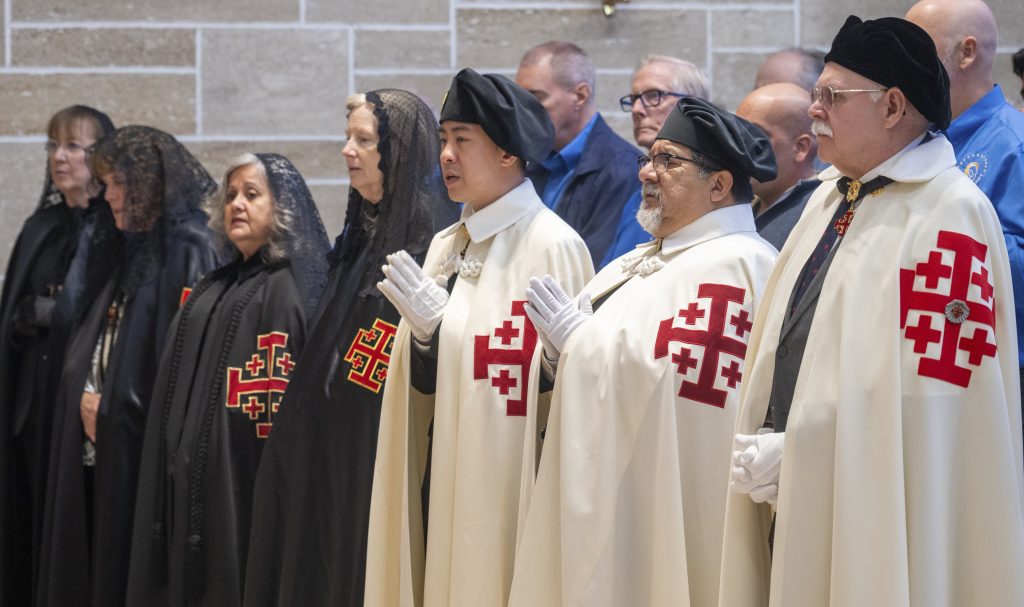
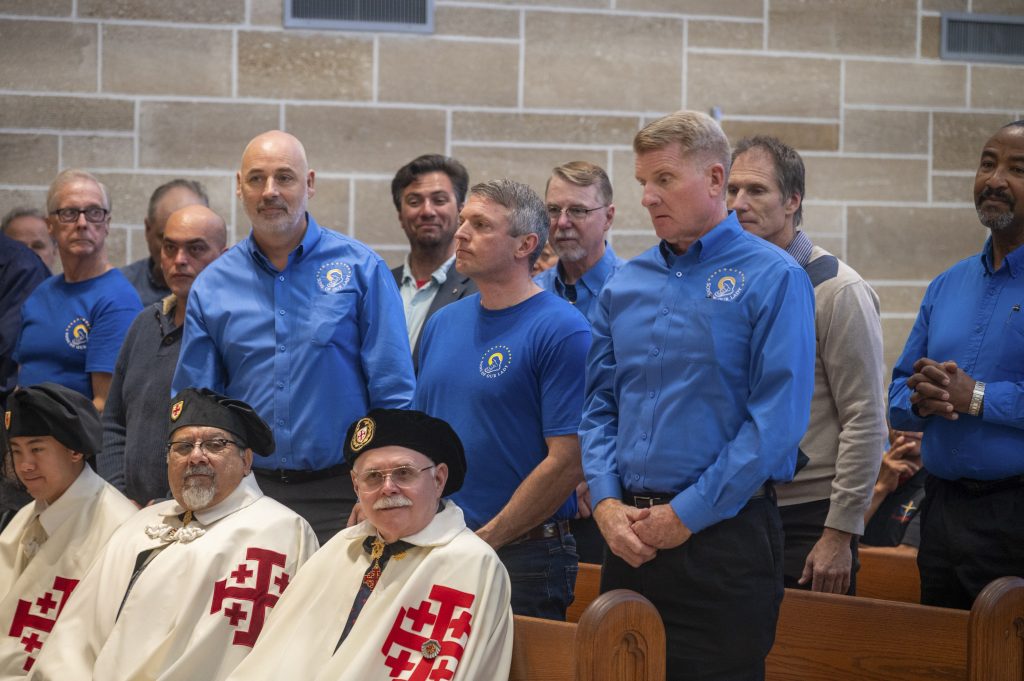
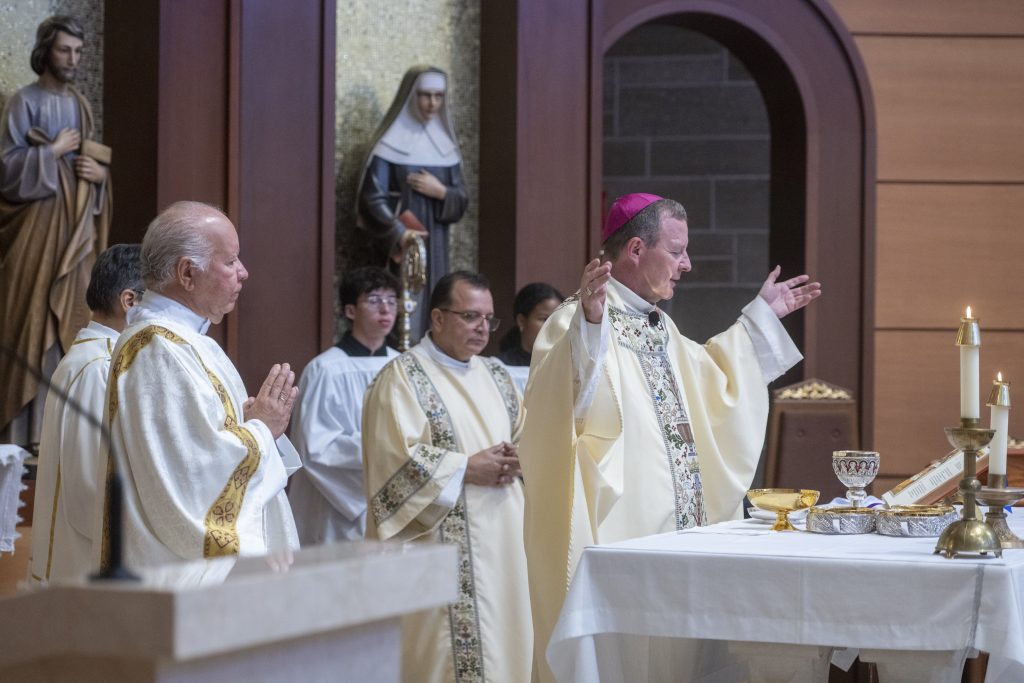
The celebration, held in English and Spanish, reflected the rich cultural and spiritual tapestry of the diocese. The Mass, celebrated by Bishop Erik Pohlmeier in the Shrine Church, brought together representatives from several lay movements including Emmaus, Cursillo and the Knights of Columbus.
Mission Nombre de Dios, where Spanish explorers celebrated the first Catholic Mass in what is now the United States in 1565, and where the first Mass was offered in Spanish, served as a fitting backdrop for the event.
In his homily, Bishop Pohlmeier reminded parishioners that holiness is rooted first in God’s action.
“Becoming a saint is not… a question of what I do,” he said. “We have to remember that becoming a saint means I listen better, not I do better.”
He emphasized the importance of listening in prayer.
“Too often when we pray, we do all the talking,” he told participants. “There can never be a relationship with anybody if we only talk and never listen. It is in silence that God leads you to think and to love from His heart.”
Bishop Pohlmeier urged Catholics to renew their commitment to service and discernment.
“If we take time to listen… the gifts that He gives to us will bear more fruit,” he said.
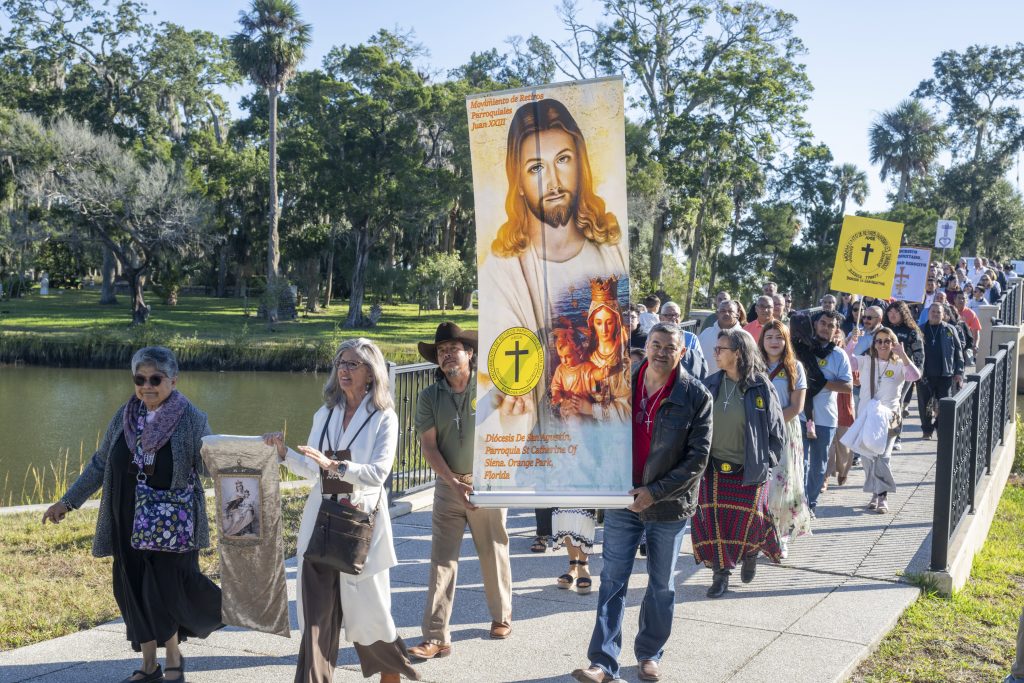
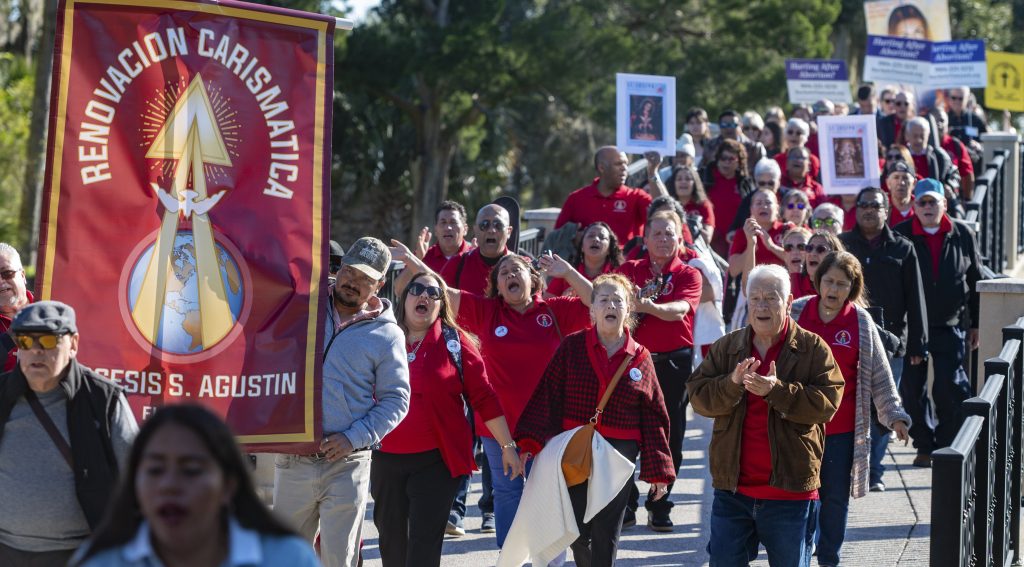
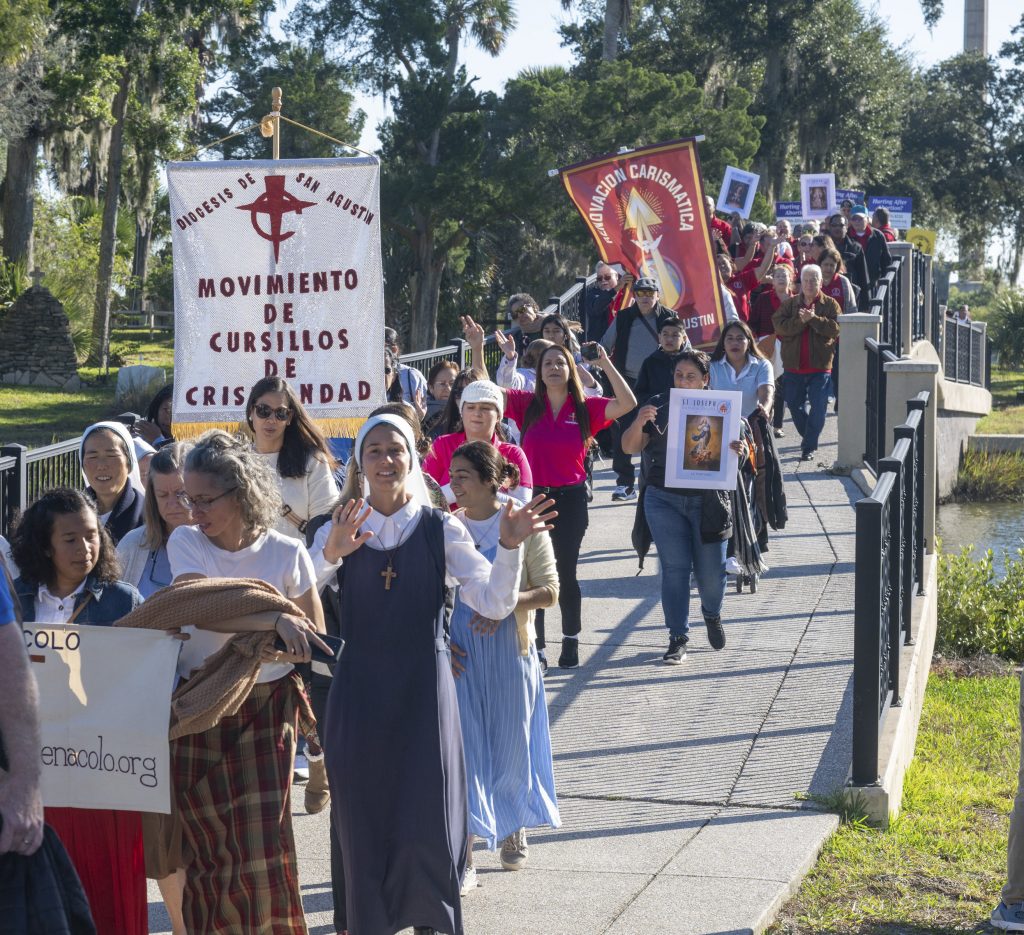
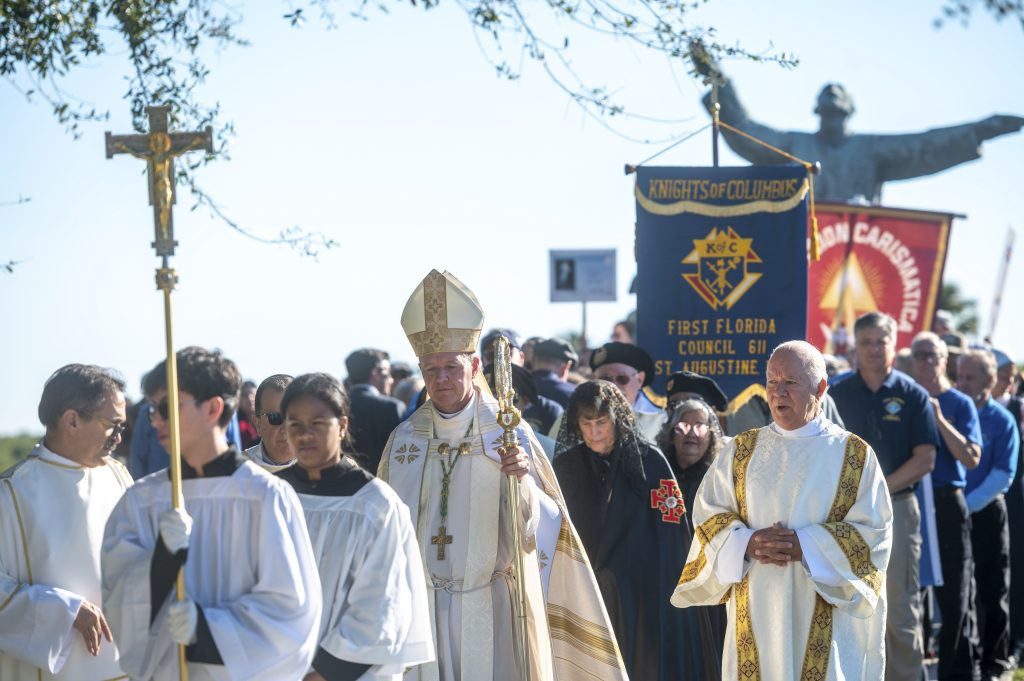
Following the Mass, parishioners processed behind the bishop to the Historic Chapel, praying together in both English and Spanish. Families, religious and lay leaders walked in unity, many holding banners representing their apostolates.
After the Mass, Bishop Pohlmeier said the Church depends on the faith and service of lay Catholics.
“The majority of the Church are lay people, that’s the main reason we celebrate their role,” he said. “Since the Second Vatican Council, there has been a renewed emphasis on helping lay people understand how to live their faith not only on Sundays but throughout the week and throughout their lives.”
He said lay movements provide structure and community that help Catholics live out the Gospel.
“These movements offer different ways for people to grow in faith, to serve, to form community and to build bonds of fellowship,” the bishop said. “Having many lay groups opens the doors to reach more people so more people can respond to God’s call in their lives.”
When asked about the enthusiasm parishioners showed for their lay groups, Bishop Pohlmeier called it a sign of the Holy Spirit.
“The theological word is ‘charism,’ a gift of the Holy Spirit,” he said. “The Spirit inspires different expressions of the faith, and as these movements grow, we can see the spiritual fruit they bear. It’s no surprise there is such passion; people sense the presence of God in this work.”
Ricardo Barros, an Emmaus community member and parishioner at Queen of Peace Catholic Church in Gainesville, said Emmaus retreats help guide parishioners toward deeper service.
“Emmaus is the base to get new people to serve in the church,” he said. “People feel happy because it’s a great group… people represent the Holy Spirit in the community.”
Barros estimated the community brought more than 40 members to the celebration.
William Kelly, a regional administrator for the Knights of Columbus and a parishioner at St. Joseph Catholic Church in Mandarin, emphasized the Knights’ commitment to evangelization and charity.
“We’re called to evangelize as part of our faith,” Kelly said. “There’s strength in numbers… we are very focused on sharing the good news and making sure that not only the parishes thrive but so do the communities around us.”
Kelly said the Knights have nearly 15,000 members serving within the diocese.
“We love St. Augustine… and we know we’ve got so much more work to do,” he said.
The diocese’s celebration at the birthplace of American Catholicism linked centuries of faith tradition, from the first Spanish Mass in 1565 to today’s multicultural Catholic community.
“Our prayer is that this celebration… will lead us to a stronger life of prayer… and we become saints,” Bishop Pohlmeier said.